
As a hurricane approaches, the window for safe property preparation closes much faster than most homeowners realize. Attempting to trim large branches once a warning has been issued often creates more danger than it prevents, as uncollected debris can quickly become lethal projectiles in high winds.
The primary goal of pre-storm maintenance is to reduce the “sail effect” of the canopy and remove dead wood well in advance of the outer bands. Waiting until the last minute puts both the person climbing the tree and the surrounding neighborhood at unnecessary and extreme risk.
Observing the Forty-Eight-Hour Cutoff
Once a hurricane warning is officially issued, you generally have less than forty-eight hours before tropical-storm-force winds arrive. Professional arborists and municipal waste services typically stop picking up yard trash at this stage to secure their own equipment and facilities.
- Cease all major cutting operations the moment a hurricane warning is announced for your specific area.
- Check local news for the “last call” on debris pickup to ensure your piles aren’t left on the curb during the storm.
- Focus your remaining energy on securing loose items like patio furniture rather than creating new stacks of heavy wood.
If you trim trees after the final trash collection, those branches will sit in front of your home and could be picked up by the wind. It is far safer to leave a dead branch attached to a tree than to leave it sitting loose on the ground during a surge.
Assessing Wind Speed and Gust Thresholds
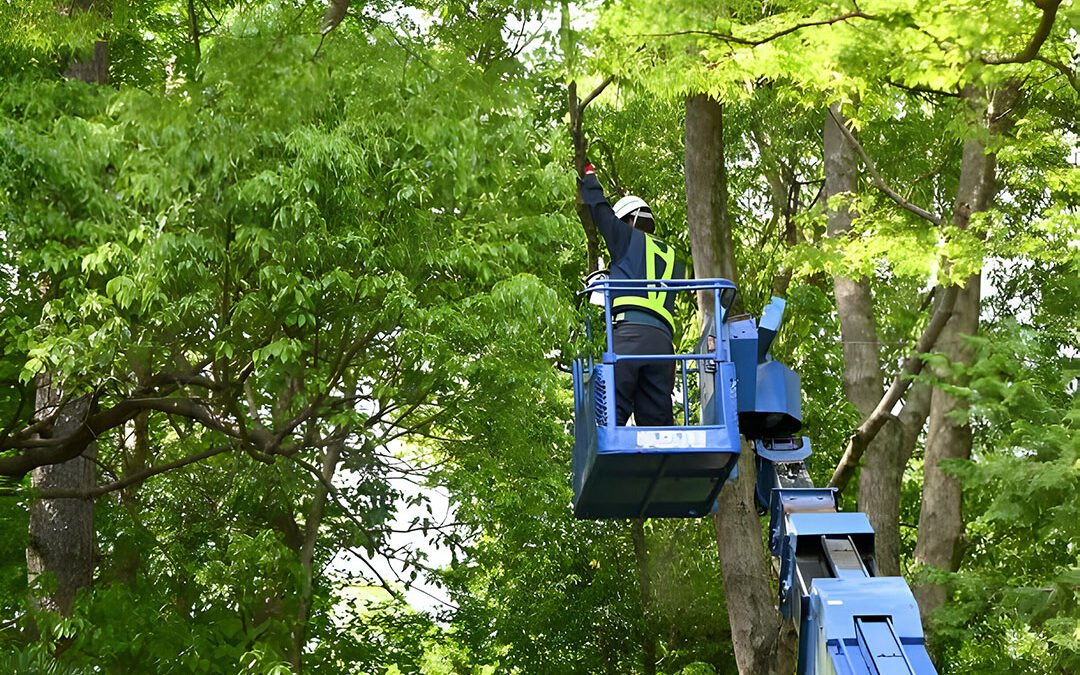
Working at heights becomes exponentially more dangerous as wind speeds increase, even before the actual storm center arrives. Professional safety standards dictate that climbers and bucket truck operators must move to the ground long before the first gusts reach dangerous levels.
- Stop all climbing and aerial lift work if sustained winds exceed 20 mph or if gusts are unpredictable.
- Recognize that wind speeds are significantly higher at the top of the canopy than they are at ground level.
- Avoid using long pole saws or heavy equipment that can be caught by a sudden crosswind.
High winds can cause branches to move unexpectedly, leading to pinched saws or lost balance for the operator. Gravity and wind are a deadly combination that should be avoided at all costs during the lead-up to a tropical event.
Prioritizing Debris Management Over Pruning
The most common mistake during a hurricane warning is generating a large volume of “green waste” that cannot be disposed of in time. During a warning, your priority must shift from cutting new branches to securing the debris that is already on the ground.
- Move existing small branches and trimmings into a garage or a secure shed if they cannot be hauled away.
- Bundle any remaining light brush with heavy-duty twine to reduce the chance of it scattering.
- Avoid placing heavy logs near storm drains, as they can cause localized flooding if they wash away.
A pile of freshly cut oak limbs is essentially a stack of unguided missiles waiting for a 100 mph gust. If the debris cannot be removed from the property entirely, it is better to stop the job and leave the tree as it is.
Avoiding Power Line Proximity in Wet Weather
As the outer bands of a hurricane move in, increased humidity and rain make working near utility lines significantly more hazardous. Water acts as a conductor, and a tree that was safe to trim in dry conditions can suddenly become a path for high-voltage electricity.
- Discontinue any work near service drops or overhead lines as soon as the first rain bands appear.
- Never attempt to “clear” a branch that has already sagged onto a power line due to wind.
- Keep all metal ladders and conductive tools far away from the house’s electrical weatherhead.
The combination of swaying branches and wet surfaces creates an unpredictable environment for electrical arcs. Safety dictates that you stay indoors and away from windows once the weather begins to deteriorate.
Recognizing the Point of Diminishing Returns
There is a psychological urge to “do something” as a storm nears, but frantic, last-minute hacking often does more harm to the tree’s health than good. Improper “lion-tailing” or topping a tree in a panic can actually make the tree more likely to fail in high winds.
- Stick to removing only the most obvious “widow-makers” or hanging dead wood if you have a clear hour of calm weather.
- Avoid structural pruning that leaves large open wounds, which are susceptible to immediate water intrusion and rot.
- Focus on clearing gutters of small twigs and leaves to prevent interior water damage instead of heavy sawing.
Once the sky turns that characteristic pre-storm grey, your preparation time has effectively ended. Transitioning from active work to a “shelter-in-place” mindset is the most important safety decision you can make.
Securing Your Home Before the First Gusts
The safest time to trim your trees is during the calm winter months, not in the frantic hours before a hurricane makes landfall. If you find yourself under a warning with unmanaged trees, the most responsible action is to stop the work, secure existing debris, and prepare your family for the weather.
By respecting the deadlines set by local authorities and the laws of physics, you protect your neighborhood from flying debris and keep yourself out of harm’s way.