
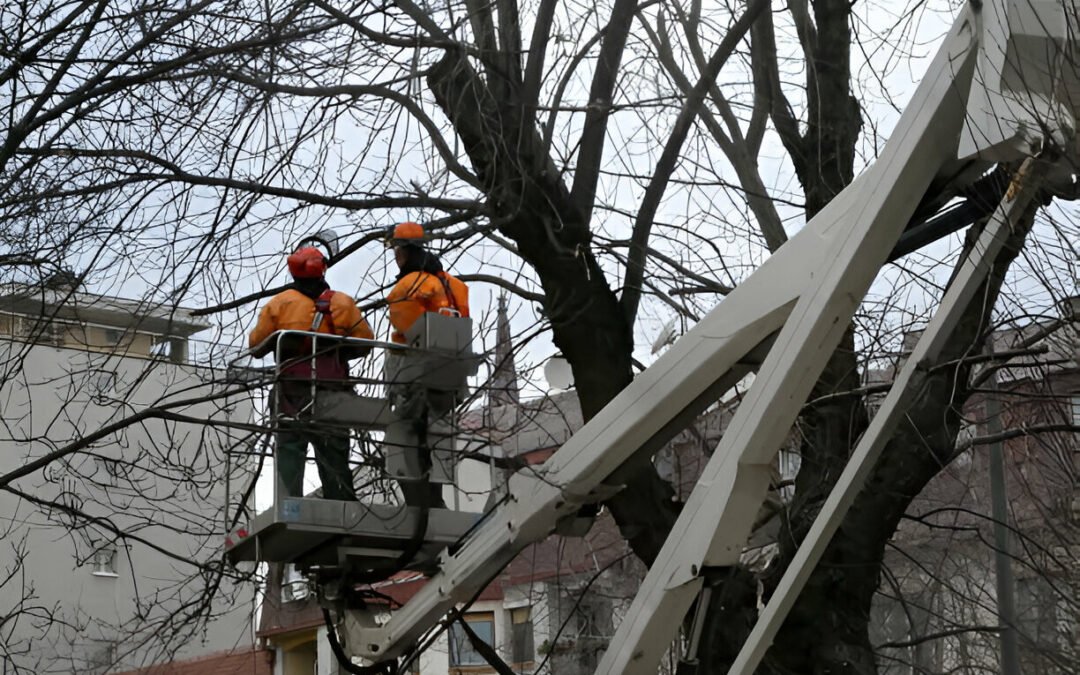
Maintaining the trees on your property is a necessary part of homeownership, but it is also one of the most dangerous tasks you can commission. While it is tempting to choose the lowest estimate to save money, the hidden costs of a safety failure can be life-altering and financially ruinous.
A bargain-basement price often reflects a lack of specialized equipment, proper insurance, or rigorous training for the crew. When you prioritize the lowest bid over safety protocols, you are essentially gambling with your property value and your personal liability.
Working Near High-Voltage Power Lines
Trees that grow into or near utility lines create a high-risk environment where a single mistake can lead to a fatal electrical discharge. Electricity can arc through the air or travel down a damp branch, meaning a worker does not even have to touch the wire to be electrocuted.
- Seek out professionals who have specific line-clearance certifications and specialized insulated tools.
- Ensure the crew uses non-conductive ladders and safety gear designed for electrical environments.
- Verify that the company coordinates with the local utility provider before beginning any work near live wires.
In these scenarios, the risk of a massive power outage or a brush fire far outweighs any potential savings from a cheap contractor. Specialized training is the only thing standing between a routine trim and a neighborhood-wide emergency.
Removal of Large or Decaying Trees
Taking down a massive oak or a rotting pine requires complex physics and precise rigging to ensure the trunk falls exactly where intended. A tree that is structurally compromised by rot or pests is unpredictable, and an amateur crew may not be able to anticipate how the wood will react under tension.
- Check for the use of high-capacity cranes or bucket trucks to disassemble the tree in small, manageable sections.
- Confirm that the team uses professional-grade ropes, pulleys, and friction devices to lower heavy limbs safely.
- Ask about the crew’s experience with “hazard trees” that show signs of fungal growth or hollow trunks.
Attempting to save a few hundred dollars on a large removal can result in a multi-thousand-dollar roof repair if a limb swings the wrong way. True professionals invest in the heavy machinery required to keep every piece of the tree under total control.
Projects Overhanging Residential Structures
When a tree looms directly over your home, a garage, or a neighbor’s property, the margin for error disappears completely. Any dropped tool or miscalculated cut can cause immediate structural damage that compromises the integrity of your living space.
- Prioritize companies that utilize aerial lifts to avoid climbing directly on fragile or overhanging branches.
- Look for a clear “drop zone” plan where ground workers are positioned to keep bystanders away from the impact area.
- Require the use of protective padding or plywood to shield your lawn and hardscaping from falling debris.
The physical safety of the occupants inside the home must always be the primary concern during the operation. A cheap service may take shortcuts with rigging that put your family at unnecessary risk of injury.
Steep Slopes and Difficult Terrain
Tree work on hillsides or uneven ground introduces a significant risk of equipment rolls and worker slips. Standard techniques that work on a flat lawn are often insufficient for maintaining balance and control on a steep incline or near a retaining wall.
- Ensure the company uses specialized stabilization equipment for their trucks and chippers.
- Verify that climbers are using secondary safety lines and fall-arrest systems designed for awkward angles.
- Ask how the crew plans to transport heavy logs uphill or across unstable soil without causing erosion.
Gravity is a constant threat in tree care, and working on a slope magnifies every danger associated with the job. Choosing a team with the right technical experience ensures the project is completed without damaging the landscape or injuring the staff.
Storm Damage and Emergency Response
After a major storm, many “fly-by-night” operations appear, offering quick fixes for fallen limbs at low prices. These situations are actually the most dangerous because the wood is often under extreme tension or “spring-loaded” and can snap violently when cut.
- Avoid “storm chasers” who lack permanent local addresses and verifiable safety records.
- Prioritize teams that perform a thorough site assessment for hidden hazards like hanging “widow-makers” or leaning trunks.
- Demand to see active workers’ compensation and liability insurance before any emergency work begins.
The urgency of a fallen tree should never lead to a lapse in judgment regarding who you allow on your property. Professional arborists have the expertise to release wood tension safely, preventing a secondary disaster during the cleanup process.
Investing in the Ultimate Protection for Your Home
Choosing a tree service based on safety standards rather than the bottom line is an act of responsible homeownership. While a professional estimate might be higher, it includes the cost of high-quality equipment, rigorous training, and the comprehensive insurance that shields you from liability.
By putting safety first, you ensure that the job is done right the first time without the lingering fear of accidents or property damage.