
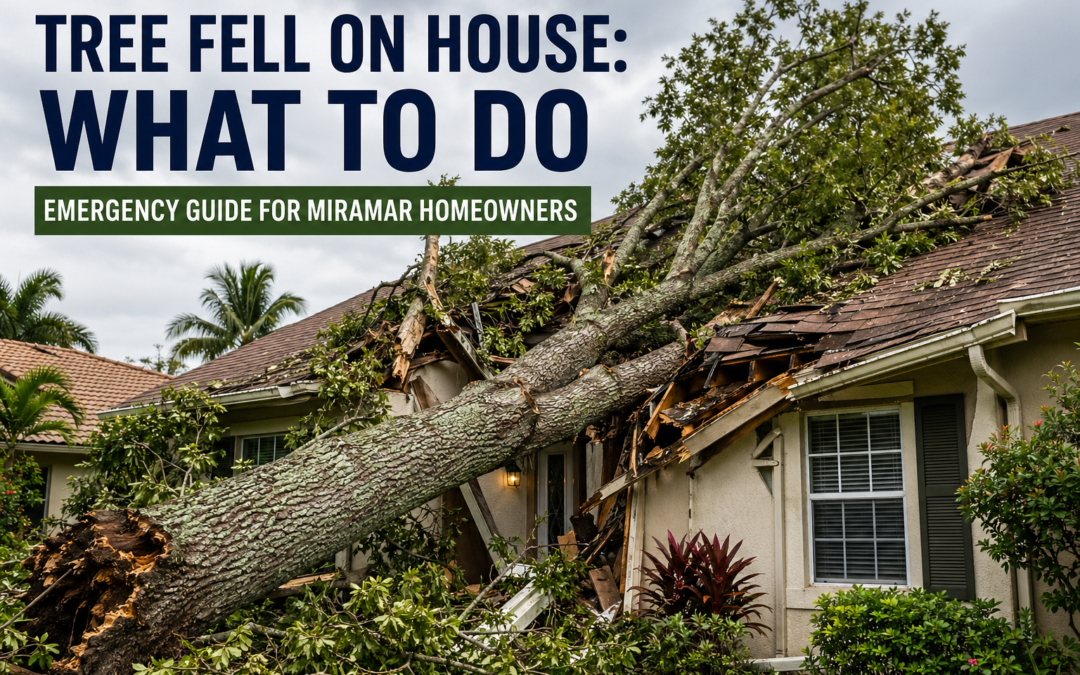
It usually happens without warning—a loud crack, a sudden impact, and then silence. When a tree falls on your home, the shock can leave you frozen, unsure whether to act first or assess what just happened. In a place like Miramar, where storms can roll in quickly and soils can become saturated just as fast, fallen trees are not uncommon. But what separates a manageable situation from a costly disaster is not luck—it’s how you respond in those first critical moments. This guide walks you through what to do, calmly and correctly, when the unexpected happens.
The First Priority: Safety Over Everything
The instinct to inspect the damage immediately is natural, but it can also be dangerous. A tree that has struck your home may have compromised the structure in ways that are not immediately visible. Ceilings can collapse minutes later. Walls can shift. Electrical systems may be exposed. The safest course of action is to get everyone out of the house and keep a safe distance from the impacted area. If there is any sign of a gas leak—such as a strong odor—or evidence of sparking or smoke, emergency services should be contacted right away. Even if the damage appears minor, it is not worth the risk of staying inside a potentially unstable structure.
Hidden Dangers: Electricity and Structural Instability
One of the most overlooked risks in these situations is electrical hazard. Trees often bring down power lines or damage wiring within the home. What appears to be a simple fallen trunk can, in reality, be carrying live current. Homeowners should avoid approaching the tree or any nearby wires and instead contact their utility provider to assess and secure the area. At the same time, structural damage is not always obvious. A roof may appear intact while its support system has been weakened. Floors may shift subtly. These are not conditions to test or “wait out.” They require professional evaluation.
Why Documentation Matters More Than You Think
Once everyone is safe, the next step is often overlooked in the rush to “fix” the problem: documentation. Taking clear photographs and short videos of the damage—both outside and inside the home—can make a significant difference when filing an insurance claim. This includes capturing the position of the tree, the point of impact, and any visible interior damage. Insurance providers such as State Farm and Allstate rely heavily on this early evidence. Without it, homeowners may find themselves facing delays or disputes over coverage. In other words, a few minutes spent documenting can save weeks of frustration later.
The Critical Role of Emergency Tree Removal
At this point, many homeowners make a costly mistake—they wait. They wait for daylight. They wait to “see if it gets worse.” They wait for insurance instructions. And in doing so, they allow additional damage to occur. A tree resting on a home continues to shift, especially in wind or rain. Every hour it remains in place increases the risk of further structural damage, water intrusion, and even collapse. This is why contacting an emergency tree removal service immediately is essential. A qualified team can remove the tree safely, stabilize the affected area, and prevent the situation from escalating. In urgent cases, speed is not just helpful—it is decisive.
Navigating the Insurance Process
Once the immediate danger has been addressed, homeowners should contact their insurance provider as soon as possible. Most policies cover tree damage caused by natural events such as storms or high winds. Providing clear documentation, along with a straightforward account of what happened, helps streamline the claims process. It is also worth asking about temporary accommodations if the home is no longer safe to occupy. While insurance can cover much of the financial burden, delays in reporting or incomplete documentation can complicate matters significantly.
Understanding Why Trees Fall in South Florida
In regions like Miramar, tree failures are often the result of a combination of environmental factors rather than a single cause. Heavy rains can saturate the soil, weakening root systems. Strong winds place stress on trunks and branches. In some cases, internal decay or disease goes unnoticed until the tree fails under pressure. What makes this particularly challenging is that many trees appear healthy right up until the moment they fall.
Preventing the Next Incident
After the immediate crisis has passed, attention should turn to prevention. A fallen tree is often a warning sign, not an isolated event. Nearby trees may have similar weaknesses—especially if they share the same soil conditions or have been exposed to the same weather patterns. A professional arborist inspection can identify risks that are not visible to the untrained eye. Addressing these early—through pruning, reinforcement, or removal—can prevent future emergencies.
A Final Thought: Calm, Then Act
When a tree falls on your house, the situation feels chaotic, but the response does not have to be.
The sequence is simple:
- Ensure safety
- Document the damage
- Act quickly with professional help
Handled correctly, even a serious incident can be contained. Handled slowly or carelessly, it can escalate into something far more costly and dangerous. For homeowners in Miramar, preparation and quick action are the difference between disruption and disaster.
❓ Frequently Asked Questions: Tree Fell on House (Miramar, FL)
What should I do immediately if a tree falls on my house?
The first step is to get everyone out of the home safely and stay away from the damaged area. Once you are at a safe distance, contact emergency services if there are hazards like gas smells or sparks. After that, document the damage with photos and call a professional emergency tree removal service right away to prevent further structural issues.
Does homeowners insurance cover a tree falling on a house?
In most cases, yes. If the tree fell due to a natural event like a storm, wind, or lightning, your policy will typically cover both the damage to your home and the cost of removing the tree. Providers such as State Farm and Allstate usually require clear documentation, so taking photos immediately is essential.
Who is responsible for removing the tree?
If the tree came from your property, your insurance generally covers removal. If it came from a neighbor’s yard, responsibility may depend on whether the tree was healthy or neglected. Regardless of fault, the priority is to remove the tree quickly to prevent further damage.
How quickly should a fallen tree be removed from a house?
Immediately. A tree sitting on your home can continue to shift, especially with wind or rain, causing additional structural damage. Emergency tree removal services are designed to respond quickly—often within hours—to stabilize the situation and minimize costs.
Can I remove a fallen tree from my house myself?
No. Attempting to remove a tree without professional equipment and experience is extremely dangerous. There may be hidden structural damage, tension in the wood, or electrical hazards. Always hire a licensed and insured tree service to handle removal safely.
What if the tree is touching power lines?
Stay far away and do not attempt to approach or remove the tree. Contact your utility company immediately. Trees in contact with power lines can carry live electricity and pose a serious risk of injury or death.
How much does emergency tree removal cost in Miramar, FL?
Costs vary depending on the size of the tree, the extent of the damage, and the complexity of the removal. Emergency situations may cost more due to urgency and risk, but in many cases, insurance will cover a significant portion of the expense.
What happens after the tree is removed?
Once the tree is removed, the next steps typically include securing the structure (such as tarping the roof), assessing structural damage, and beginning repairs. A professional tree service may also recommend an arborist inspection to check for other at-risk trees on your property.
How can I prevent a tree from falling on my house in the future?
Regular tree inspections are key. Removing dead or weakened trees, trimming overhanging branches, and monitoring tree health—especially after storms—can significantly reduce the risk. In areas like Miramar, proactive maintenance is essential due to weather conditions.
When should I call an emergency tree service?
You should call immediately if:
- The tree is on your home
- It’s leaning or unstable
- It’s touching power lines
- There is visible structural damage
Delaying can lead to more damage, higher repair costs, and increased safety risks.
📞 Need Help Right Now?
If a tree has fallen on your home, don’t wait. Search for “emergency tree removal near me” or contact a local Miramar tree service that offers 24/7 response.
👉 Fast action can save your home—and thousands in repair costs.