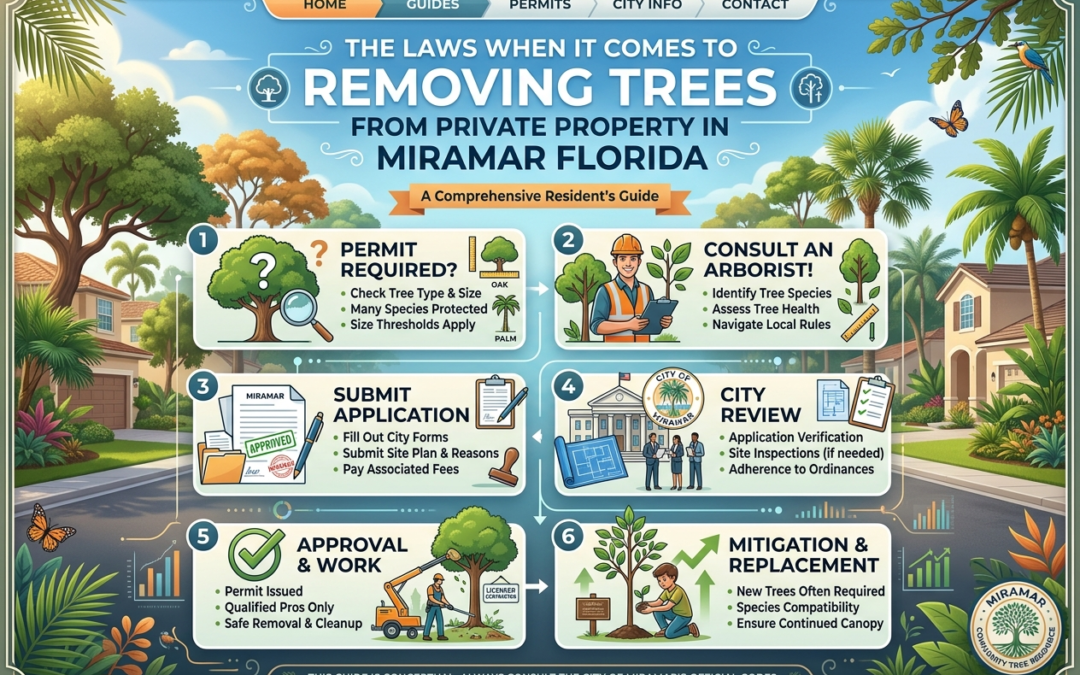
The Laws When It Comes To Removing Trees From Private Property In Miramar Florida
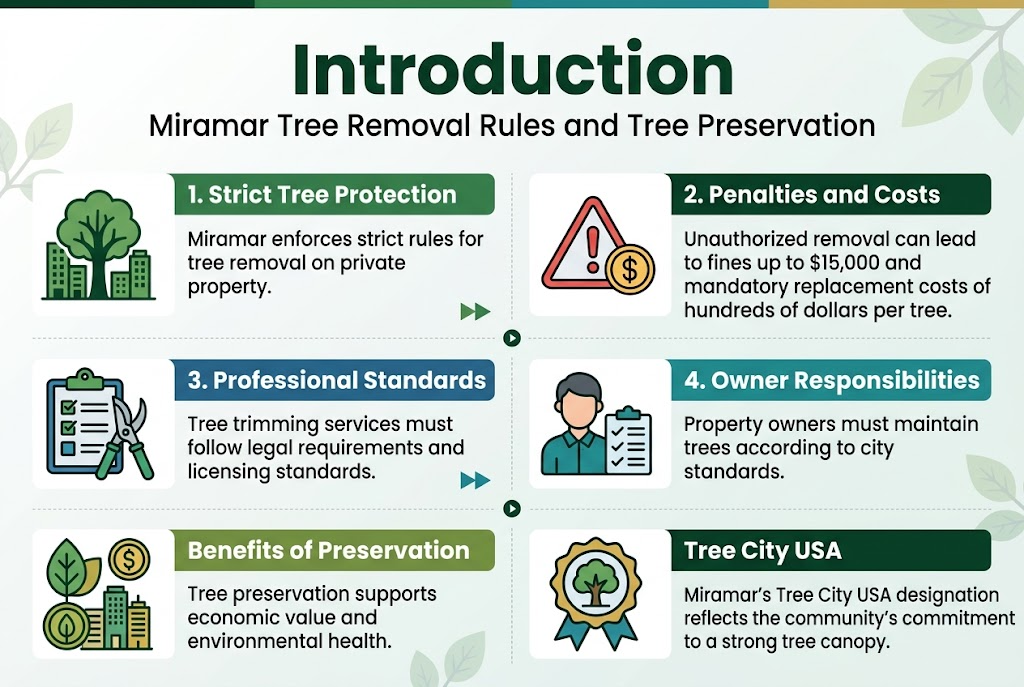
This guide covers the legal requirements and potential consequences you’ll face for improper tree removal, the professional standards and licensing requirements for tree trimming services, and your responsibilities as a property owner for maintaining trees according to city standards. You’ll also learn about the economic and environmental benefits that make tree preservation worthwhile, plus how Miramar’s Tree City USA designation reflects the community’s commitment to maintaining its valuable tree canopy.
Professional Tree Trimming Requirements and Regulations
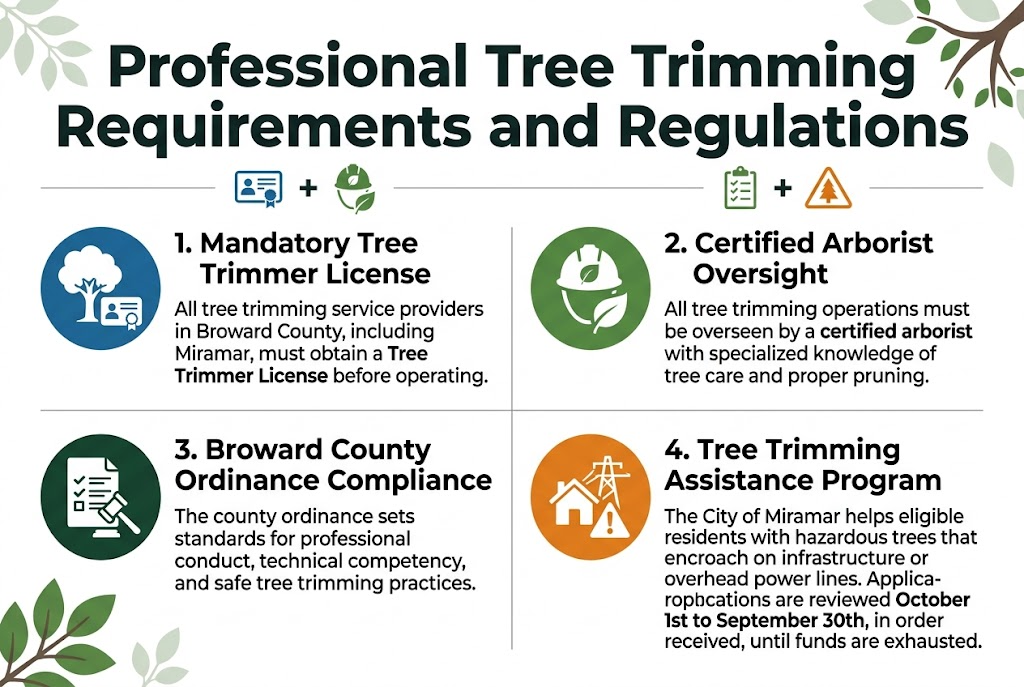
Mandatory Tree Trimmer License for All Service Providers
The Broward County Board of County Commissioners has established stringent licensing requirements for all tree trimming operations within the county, including Miramar. This regulatory framework was implemented in response to growing concerns about substandard tree trimming practices that were compromising the health, safety, and welfare of the public. All businesses and governmental agencies that perform tree trimming services in Broward County must obtain a Tree Trimmer License before conducting any operations. This mandatory licensing ensures that only qualified professionals handle tree care activities, protecting both the urban forest and property owners from potentially damaging practices.
Certified Arborist Oversight for Tree Care Operations
Beyond the basic licensing requirement, all tree trimming operations must be overseen by a certified arborist. This professional oversight requirement ensures that tree care decisions are made by individuals with specialized knowledge of tree biology, proper pruning techniques, and industry best practices. The certified arborist oversight provision adds an essential layer of expertise to tree trimming operations, helping to preserve tree health while addressing safety concerns. This requirement recognizes that proper tree care requires specialized knowledge that goes beyond basic landscaping skills.
Broward County Ordinance Compliance for Tree Trimming Industry
The comprehensive ordinance regulating the tree trimming industry reflects the county’s commitment to maintaining high standards in urban forestry management. This regulatory framework addresses the quality concerns that had previously plagued the tree trimming industry in Broward County. The ordinance establishes clear standards for professional conduct, technical competency, and operational procedures that all licensed tree trimmers must follow. Compliance with these regulations ensures that tree trimming activities contribute to the long-term health of the urban canopy rather than compromising it through improper techniques or inadequate knowledge.
City Tree Trimming Assistance Program for Hazardous Trees
Now that we have covered the professional requirements, the City of Miramar has established a Tree Trimming Assistance Program specifically designed to help eligible residents address potentially hazardous trees. This program focuses on trees that pose verifiable risks by encroaching into existing infrastructure and overhead power lines. Applications for this assistance program are accepted and reviewed in the order they are received, operating on an annual cycle from October 1st to September 30th. The program awards assistance based on highest priority cases until available funds are exhausted, ensuring that the most critical tree safety issues receive prompt attention while supporting residents who might otherwise struggle to afford professional tree care services.
Property Owner Responsibilities and Tree Maintenance Standards
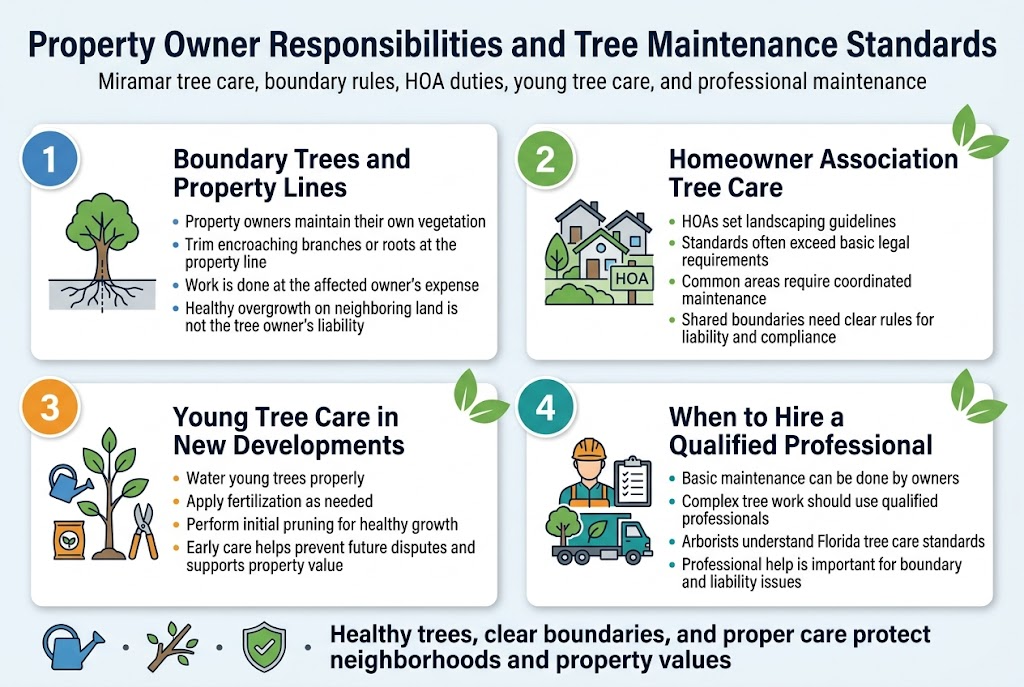
Property owners in Miramar must maintain their trees according to established care standards that preserve both tree health and neighborhood aesthetics. While Florida law places the primary responsibility on property owners to manage their own vegetation, proper maintenance becomes crucial when trees are located near property boundaries or in shared spaces.
When trees extend across property lines through branches or roots, Florida common law establishes clear maintenance obligations. Property owners have the right to trim back any encroaching tree roots or branches at the property line, but this work must be completed at their own expense. The owner of the tree itself does not bear liability for healthy vegetation that naturally extends onto neighboring property, placing the burden of maintenance on the affected property owner.
Homeowner Association Tree Care Obligations
Homeowner associations play a significant role in establishing and enforcing tree maintenance standards within their communities. These organizations often implement landscaping guidelines that exceed basic legal requirements to maintain property values and community appearance. When trees are located in common areas or affect multiple properties, HOAs typically coordinate maintenance activities and ensure compliance with local regulations.
The legal framework surrounding tree responsibility becomes particularly important in HOA-governed communities, where shared boundaries and common areas require clear protocols for maintenance and liability. Associations must navigate Florida’s established precedent that places trimming responsibilities on the affected property owner rather than the tree owner.
Young Tree Care Responsibilities for New Developments
New developments in Miramar face specific obligations regarding young tree establishment and care. Property owners must ensure proper watering, fertilization, and initial pruning to establish healthy growth patterns that will benefit the community long-term. These early care practices are essential for preventing future conflicts over encroaching vegetation and maintaining the tree canopy that contributes to Miramar’s environmental goals.
The investment in proper young tree care directly impacts future property values and reduces potential disputes between neighbors. Florida courts have recognized that mature trees significantly increase property value, making early establishment care a wise financial investment.
Qualified Professional Hiring Requirements
While property owners can perform basic maintenance themselves, complex tree work often requires qualified professionals to ensure safety and compliance with local standards. Professional arborists understand the specific requirements for tree care in Florida’s climate and can provide services that maintain tree health while respecting property boundaries.
Hiring qualified professionals becomes particularly important when dealing with boundary trees or potential liability situations. These experts can assess tree condition, determine appropriate maintenance schedules, and perform work that protects both the tree’s health and surrounding property interests.
Economic and Environmental Benefits of Tree Preservation
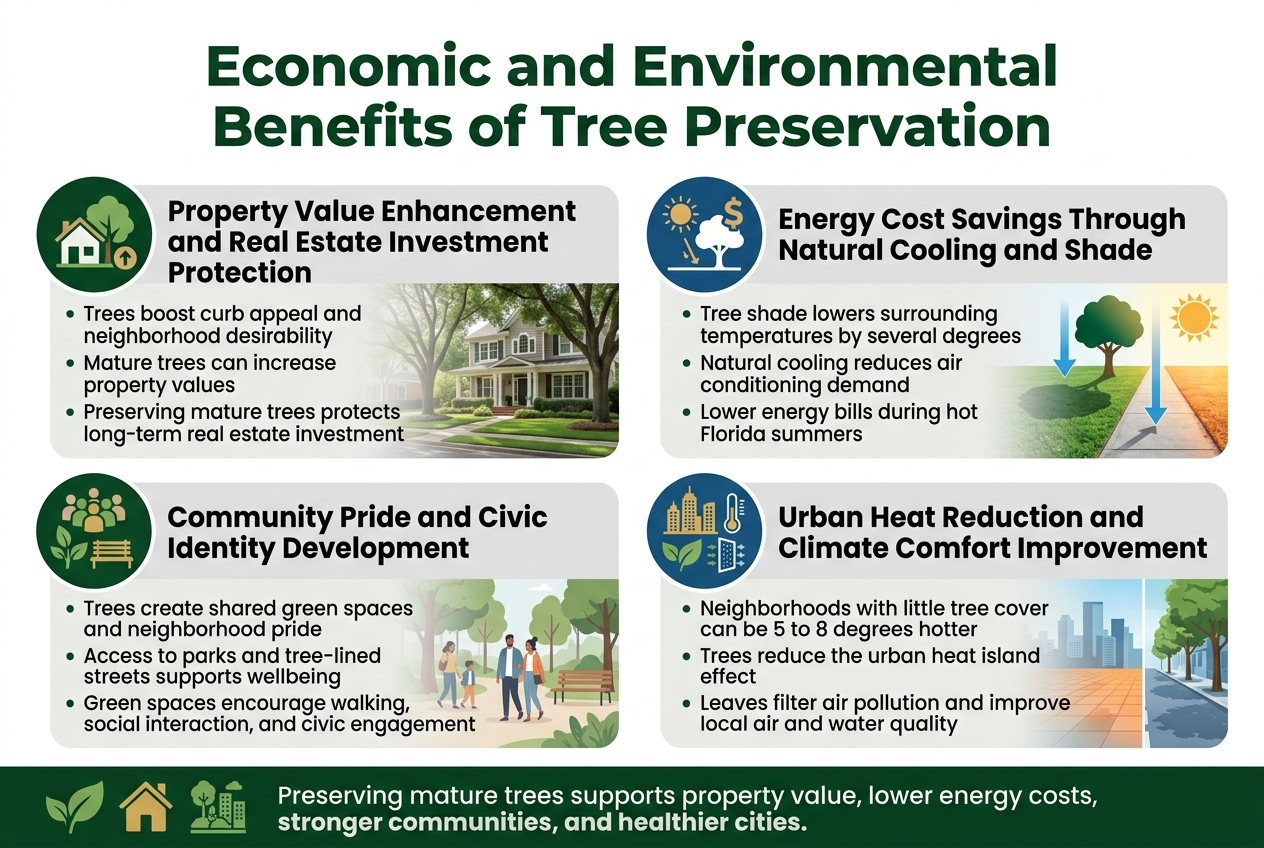
Trees significantly boost property values and protect real estate investments in Miramar. Research demonstrates that mature trees can increase property values by providing natural landscaping that enhances curb appeal and neighborhood desirability. The presence of well-maintained trees creates an attractive environment that potential buyers actively seek, making preserved trees a valuable asset for homeowners looking to maximize their investment returns.
Beyond aesthetic appeal, trees offer long-term financial protection for property owners. Older, larger trees store substantial amounts of carbon dioxide and provide more environmental benefits than younger specimens, making established trees particularly valuable assets. When property owners preserve existing mature trees rather than removing them, they maintain these valuable natural features that contribute to sustained property appreciation over time.
Energy Cost Savings Through Natural Cooling and Shade
Previously, we’ve established the legal framework for tree removal, but now we must consider how tree preservation directly impacts household expenses. Trees function as natural air conditioning systems, providing shade that can reduce surrounding temperatures by several degrees. This cooling effect translates into measurable energy savings as air conditioning systems don’t need to work as hard to maintain comfortable indoor temperatures.
The economic benefits of tree shade become particularly significant during Florida’s hot summers. A tree’s shade acts like natural air conditioning, keeping areas cooler than surrounding pavement and buildings. This temperature reduction helps lower energy costs for actual air conditioning systems, which increasingly work overtime due to rising temperatures and longer heatwaves caused by climate change.
Community Pride and Civic Identity Development
With this in mind, next we’ll explore how preserved trees contribute to Miramar’s community character. Trees create shared green spaces that residents naturally gravitate toward, fostering a sense of community pride and belonging. The presence of mature trees in neighborhoods provides that “welcome patch of green” that residents’ eyes seek when gazing out their windows, creating positive associations with their community.
Time spent in nature, including walks among trees in city parks, correlates with improved mental and physical health outcomes for residents. This connection between trees and wellbeing strengthens community bonds as residents share positive experiences in tree-lined areas. Access to nearby green spaces encourages physical activity and social interaction, contributing to stronger neighborhood relationships and civic engagement.
Urban Heat Reduction and Climate Comfort Improvement
Now that we understand community benefits, let’s examine trees’ role in urban climate management. Neighborhoods with extensive pavement and limited tree cover can be five to eight degrees hotter than surrounding areas with mature trees. These heat islands also stay hotter later into the night, creating detrimental health conditions for residents.
Trees combat this urban heat island effect through multiple mechanisms. Their leaves filter dangerous air pollution, particularly particulate matter from fossil fuel burning that poses the greatest threat to human lungs. However, this filtration occurs most effectively within 100 feet of trees, emphasizing the importance of preserving trees near residential areas. Additionally, trees remove pollutants and sediments from rainfall while slowly releasing cleaner water back into waterways, contributing to improved local air and water quality that benefits the entire Miramar community.
Miramar’s Tree City USA Designation and Community Impact
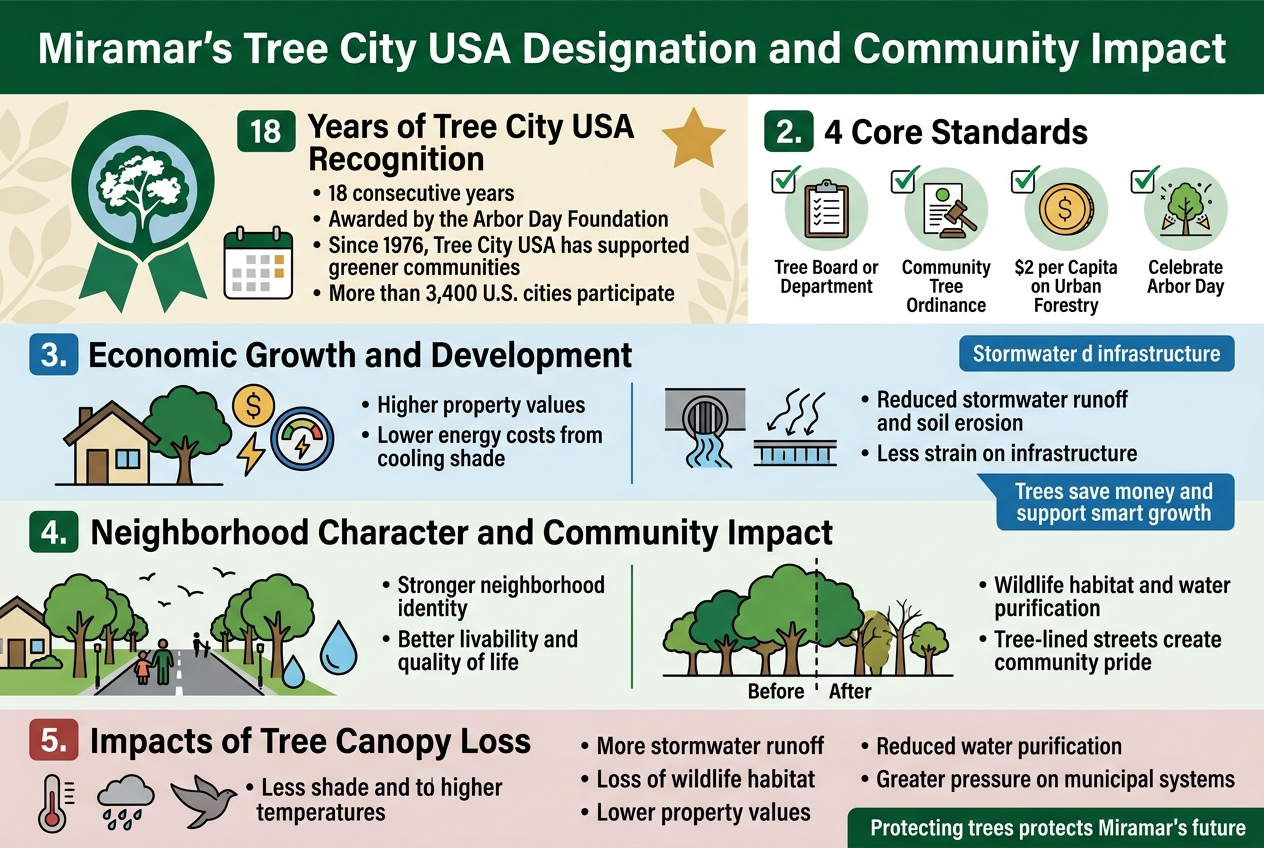
Miramar has achieved an impressive milestone by earning Tree City USA designation from the non-profit Arbor Day Foundation for 18 consecutive years. This sustained recognition demonstrates the city’s unwavering commitment to maintaining a healthy, sustainable urban forestry program. To earn this prestigious designation annually, Miramar must consistently meet four core standards of sound urban forestry management: maintaining a tree board or department, having a community tree ordinance, spending at least $2 per capita on urban forestry, and celebrating Arbor Day.
The Tree City USA Program, which has been greening communities across America since 1976, represents a nationwide movement providing the framework necessary for cities to manage and expand their public trees. More than 3,400 cities have made this commitment, with Tree City USA communities investing over $2 billion in trees annually and planting more than 991,000 trees each year.
Economic Growth and Development Promotion
Now that we understand Miramar’s long-standing commitment to tree preservation, it’s important to examine how this dedication translates into tangible economic benefits. Deputy City Manager Whittingham Gordon emphasized that trees significantly increase property values while contributing to the overall visual appeal of neighborhoods. Trees provide substantial economic advantages through energy cost reduction by offering cooling shade, which directly impacts residents’ utility bills.
The economic impact extends beyond individual properties to encompass broader community development. Trees contribute to stormwater management, preventing costly soil erosion and reducing infrastructure strain during heavy rainfall events. These natural solutions represent cost-effective alternatives to expensive engineered systems, demonstrating how tree preservation serves as both an environmental and fiscal responsibility.
Neighborhood Character and Livability Enhancement
With these economic advantages established, trees play an equally crucial role in defining neighborhood character and enhancing livability throughout Miramar. Trees create a sense of place and significantly improve quality of life by enriching residents’ lives in numerous ways. They attract wildlife, creating vibrant ecosystems within urban environments, while simultaneously purifying water sources naturally.
The visual transformation that mature trees provide cannot be understated in creating desirable residential areas. Tree-lined streets and well-maintained canopies establish neighborhood identity and pride, fostering stronger community connections among residents. This enhanced livability factor becomes particularly important as Miramar continues developing and attracting new families seeking high-quality residential environments.
Tree Canopy Loss Impact on Entire Community
Previously, we’ve explored the positive impacts of tree preservation, but understanding the consequences of tree canopy loss reveals why Miramar’s regulations exist. When significant portions of tree canopy are removed without proper consideration, the entire community experiences negative effects that extend far beyond individual property boundaries. Loss of mature trees eliminates the cooling shade that helps moderate local temperatures, potentially increasing energy consumption across neighborhoods.
The removal of established trees also disrupts stormwater management systems, placing additional burden on municipal infrastructure during severe weather events. Wildlife habitats disappear when tree canopies are eliminated, reducing biodiversity and breaking ecological connections that support healthy urban environments. Property values may decline in areas where tree coverage is significantly reduced, affecting not just individual homeowners but entire neighborhood market conditions.
Water purification capabilities diminish when tree coverage decreases, potentially impacting local water quality and increasing treatment costs for municipal systems. The cumulative effect of widespread tree removal undermines Miramar’s 18-year investment in achieving Tree City USA status and threatens the community’s ability to maintain this prestigious recognition in future years.
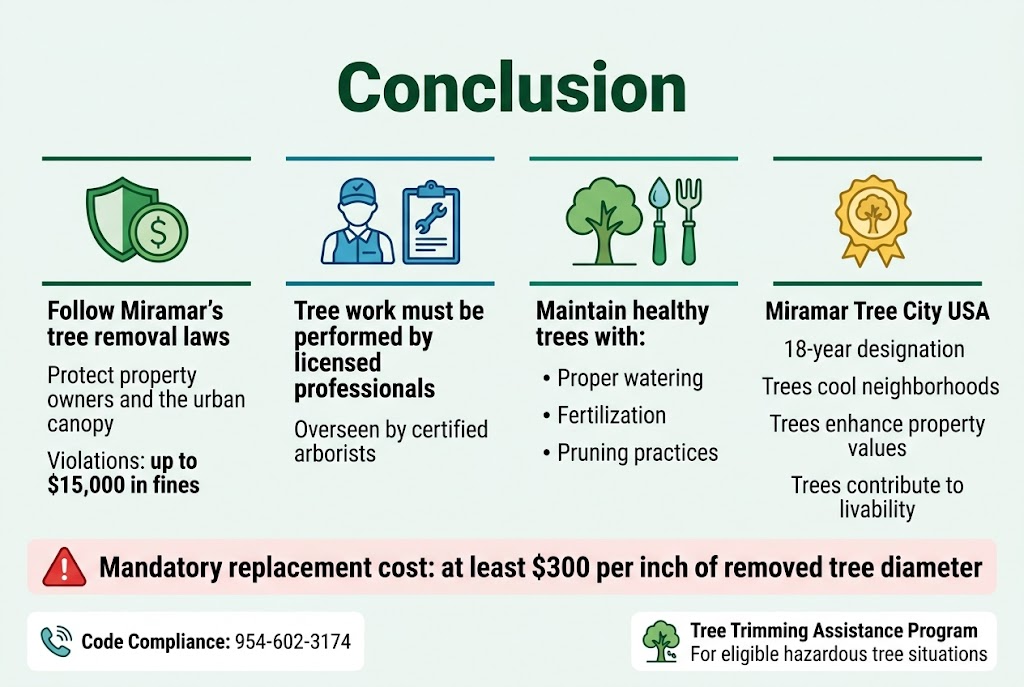
Miramar’s 18-year Tree City USA designation reflects the community’s commitment to preserving trees that provide cooling benefits, enhance property values, and contribute to the city’s livability. By working with qualified professionals and following proper maintenance standards, property owners can enjoy the economic and environmental benefits of healthy trees while avoiding costly penalties. For assistance or questions about tree care requirements, residents can contact the city’s Code Compliance office at 954-602-3174 or utilize the Tree Trimming Assistance Program for eligible situations involving hazardous trees.
Call Now If You have Tree Issues 954-6974159