
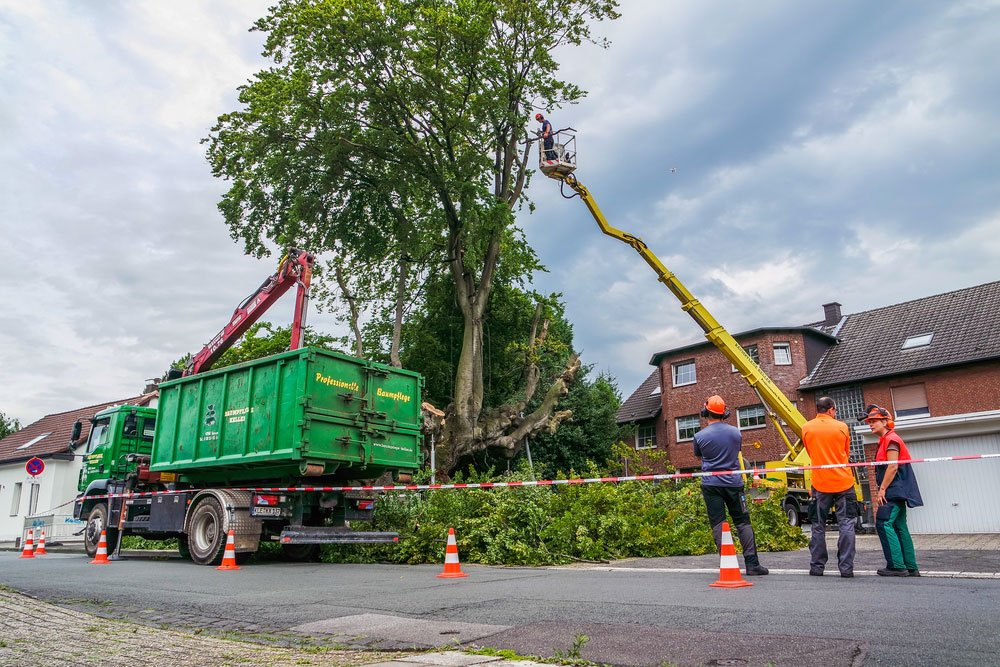
Removing a massive tree from a cramped residential side-yard is a high-stakes engineering challenge that requires more than just a chainsaw. When space is limited by fences, pool equipment, or neighboring structures, the wrong approach can lead to catastrophic property damage or personal injury.
Modern arboriculture relies on specialized, compact machinery designed to navigate these “tight-access” environments with surgical precision. Utilizing the correct equipment ensures that every limb is controlled from the canopy to the curb without putting your home at risk.
Compact Articulating Knuckle-Boom Cranes
The knuckle-boom crane is a game-changer for backyard removals because it can reach over houses and around obstacles that a traditional straight-mast crane cannot touch. These machines allow operators to lift heavy sections of a tree vertically out of a narrow space, bypassing delicate landscaping entirely.
- Use “remote-controlled” models that allow the operator to stand exactly where they have the best line of sight for the cut.
- Ensure the crane has specialized “outrigger pads” to distribute weight and prevent cracking your driveway or sidewalk.
- Look for units with a telescopic reach that can extend over a two-story home from the street.
By lifting segments upward rather than dropping them down, the risk of a “rogue limb” smashing a window or a fence is virtually eliminated. This technology turns a high-risk manual labor job into a controlled mechanical process.
Spider Lifts and Compact Tracked Aerial Platforms
When a standard bucket truck is too wide to fit through a backyard gate, a spider lift is the ultimate solution for safe access. These narrow machines can fold down to less than thirty-six inches wide, allowing them to squeeze through a standard pedestrian gate before expanding their “legs” for stability.
- Check for “non-marking” rubber tracks that protect your pavers, turf, and decorative stone from scuffing.
- Confirm the lift has enough vertical reach to allow the climber to work from the top down safely.
- Verify that the machine is dual-powered (electric or diesel) to minimize noise and fumes near bedroom windows.
These lifts provide a stable, level platform for the arborist, which is significantly safer than traditional tree climbing in a confined area. They allow for a much faster and more predictable removal process in spaces where a truck simply cannot go.
Mini-Skid Steers with Log Grapples
Once the tree is on the ground, the challenge shifts to moving several tons of wood through a narrow side-alley without destroying the lawn. Mini-skid steers are narrow, high-torque machines that can carry massive logs while pivoting on a dime.
- Utilize “articulating” steering models to prevent the turf from tearing during sharp turns in the yard.
- Use specialized log grapple attachments to keep the wood securely off the ground during transport.
- Ensure the operator uses “plywood paths” or plastic ground protection mats to create a temporary road over your grass.
Without these compact loaders, a crew would have to carry wood by hand, which is slow, dangerous, and often results in dropped logs. This equipment keeps the job site clean and ensures the heavy lifting doesn’t ruin your backyard’s aesthetics.
High-Friction Rigging and Speed-Line Systems
In situations where machinery cannot physically reach the tree, arborists use advanced “rigging” systems to slide branches through the air. A speed-line acts like a zip-line for logs, allowing them to fly over obstacles and land safely in a designated clear zone.
- Employ “impact-rated” pulleys and blocks to ensure the ropes can handle the dynamic force of falling wood.
- Use a “Port-a-Wrap” or similar friction device to allow a single ground worker to control the descent of a 500-pound limb.
- Set up a “high-line” system to lift branches over a pool or expensive outdoor kitchen.
Rigging is a science that requires a deep understanding of weight, tension, and physics to be executed safely in a tight yard. When done correctly, it allows for the removal of massive canopy sections with zero impact on the structures below.
Narrow-Access Stump Grinders
After the tree is gone, the stump remains, often tucked into a corner near a foundation or a fence line. Small, self-propelled stump grinders are designed to fit through narrow gaps and chew through hardwood roots without disturbing nearby underground utilities.
- Search for “walk-behind” or remote-controlled grinders that are less than thirty inches wide.
- Ensure the operator uses “chip guards” or screens to prevent debris from flying into your sliding glass doors.
- Ask about “vertical grinding” capabilities if the stump is positioned directly against a concrete wall.
These specialized grinders ensure that the final stage of the removal is as clean as the first, leaving your yard ready for new landscaping. They provide the power of a large machine in a footprint small enough to navigate a residential garden.
Protecting Your Property with Professional-Grade Tools
Investing in a service that uses the right high-tech equipment is the only way to guarantee a “no-contact” removal in a narrow residential space. While traditional methods might be cheaper, the precision offered by cranes, spider lifts, and mini-loaders provides an insurance policy against property damage that manual labor cannot match.
By choosing a team that brings the right tools for the job, you ensure your home stays safe and your yard stays beautiful throughout the entire process.